Plumbing in 1990s Homes in Rancho Santa Margarita: Copper, Polybutylene and What 30 Years Does to a System
Much of Rancho Santa Margarita was built from the late 1980s through the 1990s. What supply piping that era used, why polybutylene still turns up, and the wear signs…
Rancho Santa Margarita grew fast from the late 1980s through the 1990s, with neighborhoods around the lake, in Dove Canyon, Robinson Ranch and the hillside villages filling in over a little more than a decade. Many of these homes are now around 30 years old, which is the point where original plumbing starts to show its age.
What supply piping was used
Builders of this era mostly used:
- Copper, usually Type M (thin wall) or Type L, run through attics, walls and sometimes under slabs.
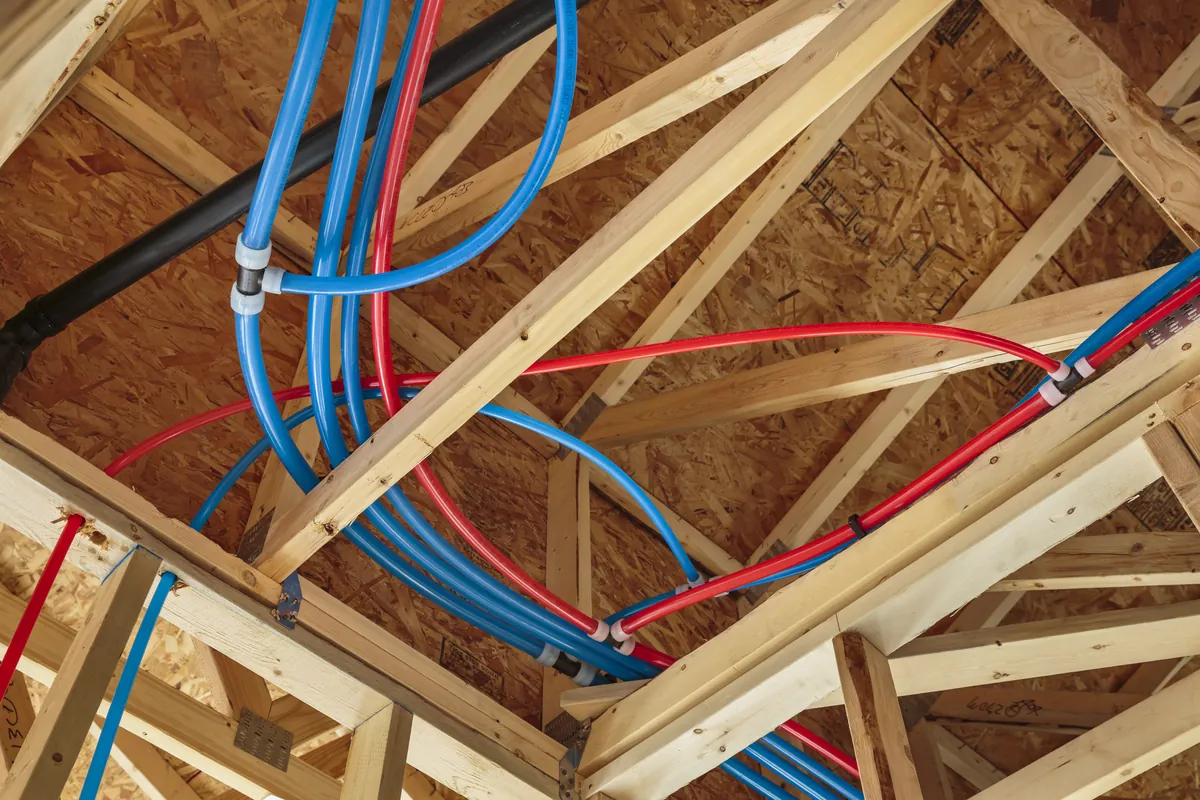
- Polybutylene (gray, sometimes blue or black plastic pipe), which was widely used across the country until production stopped in the mid-1990s. Some Southern California tracts from the late 1980s and early 1990s have it.
The easiest place to check is at the water heater, the main shutoff and behind the stop valves under sinks.
Why polybutylene matters
Polybutylene can become brittle and crack from the inside, especially where it meets fittings. It was the subject of a large class-action settlement in the 1990s, and many insurers and home inspectors flag it today. If you find gray plastic pipe with crimp rings, it is worth having it identified.
Common wear signs in 30-year-old copper
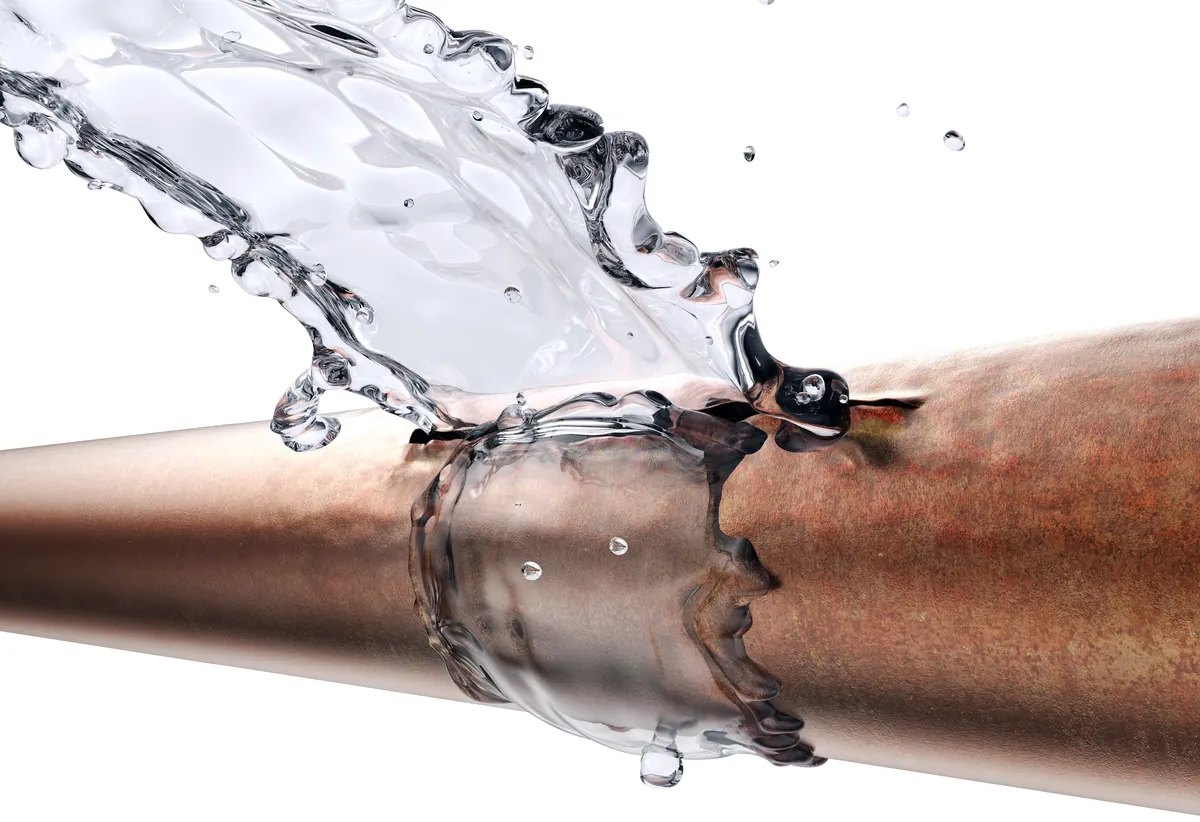
- Pinhole leaks, often in hot water lines or near elbows.
- Green or blue staining in sinks and tubs.
- Water pressure that has slowly dropped, especially upstairs.
- Discolored water after a period of no use.
- Stop valves under sinks that will not close.
Rancho Santa Margarita's hillside layout also means many homes have a pressure reducing valve at the main. A failing PRV can let pressure creep up, which stresses older pipes and fixtures.
Attic and slab considerations
Two-story homes often have supply lines in the attic, where a leak shows up as a ceiling stain. Homes with lines under the slab may show a warm spot on the floor or a meter that moves with everything off.
Good habits for a 1990s home
- Identify your pipe material and write it down.
- Check water pressure with a hose bib gauge once a year.
- Exercise the main shutoff and stop valves.
- Keep an eye on ceilings below bathrooms.
- Watch your water bill for unexplained increases.
HOA notes
SAMLARC and the neighborhood associations may have rules for contractor parking and work hours. Interior plumbing is usually not subject to architectural review, but check before any exterior changes.
Quick takeaways
- 1990s RSM homes mostly have copper, with some polybutylene.
- At 30 years, pinholes, low pressure and tired valves become common.
- A hose bib gauge and a meter test are easy early checks.
Related reading
On this site, see low water pressure upstairs and pipe straps and hangers. Neighbors can visit Coto de Caza, Trabuco Canyon and Mission Viejo, or browse every city at repipeinc.com.
Not sure if you have polybutylene?
Request a free quote to have a licensed C-36 contractor identify the piping in your Rancho Santa Margarita home. Get my free quote. Our AI system alerts a technician instantly, so you get a fast callback.
Repipe OC, 23821 Hillhurst Drive, Laguna Niguel, CA 92677, (949) 524-2362, CSLB #1087885 C-36.
Repipe OC near you
Not in Rancho Santa Margarita? The same crew serves nearby cities. See every city we serve, or jump to a neighboring city:
 Written by Repipe OC · CSLB #1087885 C-36 · 23821 Hillhurst Drive, Laguna Niguel, CA 92677 · (949) 524-2362