Insulating Hot Water Pipes in Rancho Santa Margarita: Attics, Garages and Faster Hot Water
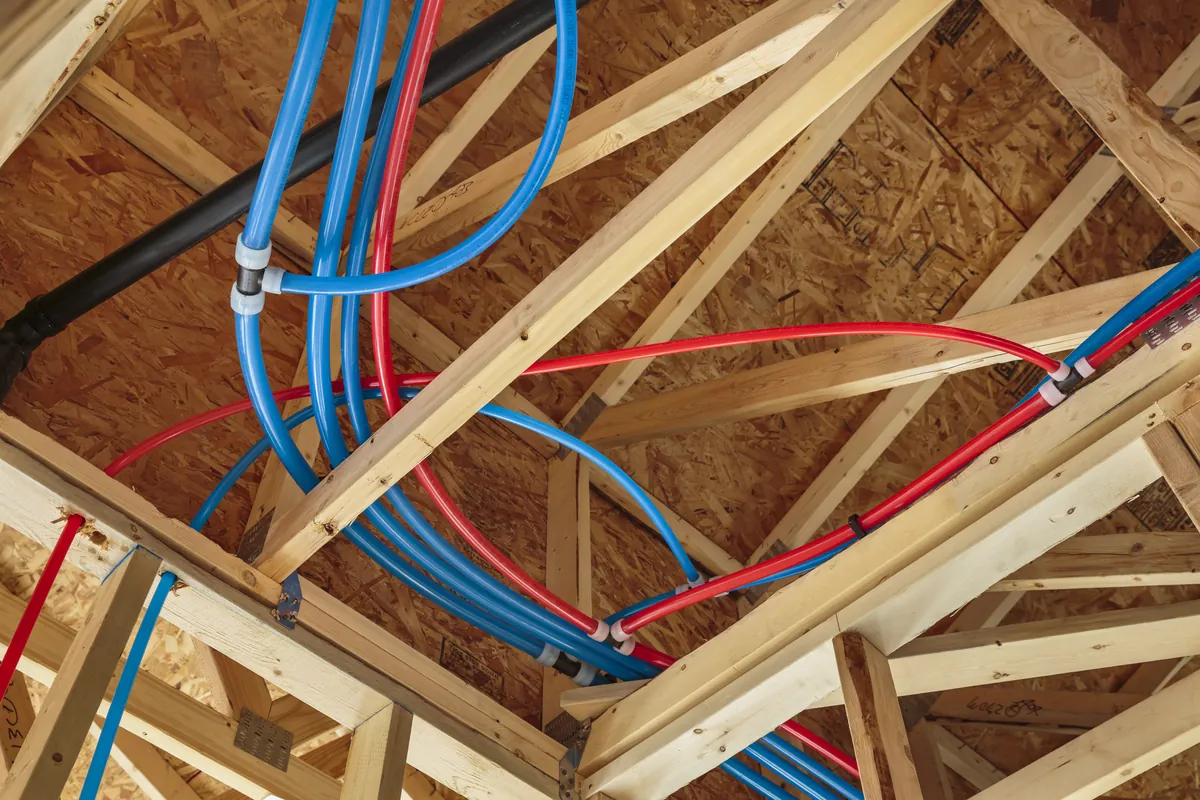
Hot water lines in RSM attics and garages lose heat on the way to your faucet. Where insulation helps most, what material to use, code basics, and how it fits a repipe.
Rancho Santa Margarita homes were mostly built in the late 1980s and 1990s, with many two-story floor plans, garages on the ground floor and long plumbing runs through attics. In a lot of those homes the hot water line leaves the heater in the garage, climbs into the attic and travels a long way to the far bathroom. Bare pipe along that route sheds heat, so you wait longer and waste more water. Pipe insulation is a simple fix that works quietly for years.
Where the heat goes
Hot water sitting in a bare pipe cools off between uses. On a cool morning in Dove Canyon or Robinson Ranch, a garage or attic can be much colder than the house. In summer, attic heat is not the issue for hot lines, but it can warm your cold lines. Insulation slows heat movement in both directions.
Where insulation helps most
- The first several feet of hot and cold pipe at the water heater
- Hot lines through the attic to upstairs and far-end bathrooms
- Runs in the garage and along exterior walls
- Recirculation loops, where water is kept moving and losing heat constantly
- Cold lines in the attic, to keep summer water from arriving warm
Choosing the material
- Polyethylene or elastomeric foam sleeves are the most common. Pick a size that fits the pipe snugly and a wall thickness suited to the space
- Fiberglass pipe wrap with a jacket is used where higher temperatures are expected, such as near a gas water heater flue
- Keep foam away from the water heater's flue and follow clearance rules
Seal seams and joints with the sleeve's adhesive strip or proper tape. Gaps at elbows and tees are where much of the heat escapes.
Code basics
California's energy code requires insulation on certain hot water piping in new construction and in many alterations, including lines leaving the water heater and pipes in a recirculation system. Requirements vary by project, so we include insulation details in the permit scope when we repipe.
Insulation and PEX-A
PEX-A holds heat a little better than copper because plastic conducts less heat, but it still benefits from insulation in attics and garages. When we repipe an RSM home, we sleeve hot lines in unconditioned spaces as part of the job, along with cold lines that run near the roof.
Pair it with the right layout
Insulation works best when runs are short and direct. During a repipe we plan the hot water routing so the farthest bathroom is not on the longest possible path. In larger homes, insulation plus a recirculation option can bring hot water close to instant.
A weekend check you can do
Look at the pipes coming out of your water heater. If they are bare or the old insulation is crumbling, that is an easy first upgrade. For attic runs, call a pro; walking an attic safely takes care.
Related reading
See tankless water heater installation in Rancho Santa Margarita and PEX repiping explained. Neighbors can visit our Coto de Caza, Trabuco Canyon and Mission Viejo sites, and every city we serve is listed at repipeinc.com.
Tired of waiting for hot water?
We will look at your layout, insulation and heater and suggest the right fix. Get my free quote. Our AI system alerts a technician instantly, so you get a fast callback.
Repipe OC, 23821 Hillhurst Drive, Laguna Niguel, CA 92677, (949) 524-2362, CSLB #1087885 C-36.
Repipe OC near you
Not in Rancho Santa Margarita? The same crew serves nearby cities. See every city we serve, or jump to a neighboring city:
 Written by Repipe OC · CSLB #1087885 C-36 · 23821 Hillhurst Drive, Laguna Niguel, CA 92677 · (949) 524-2362